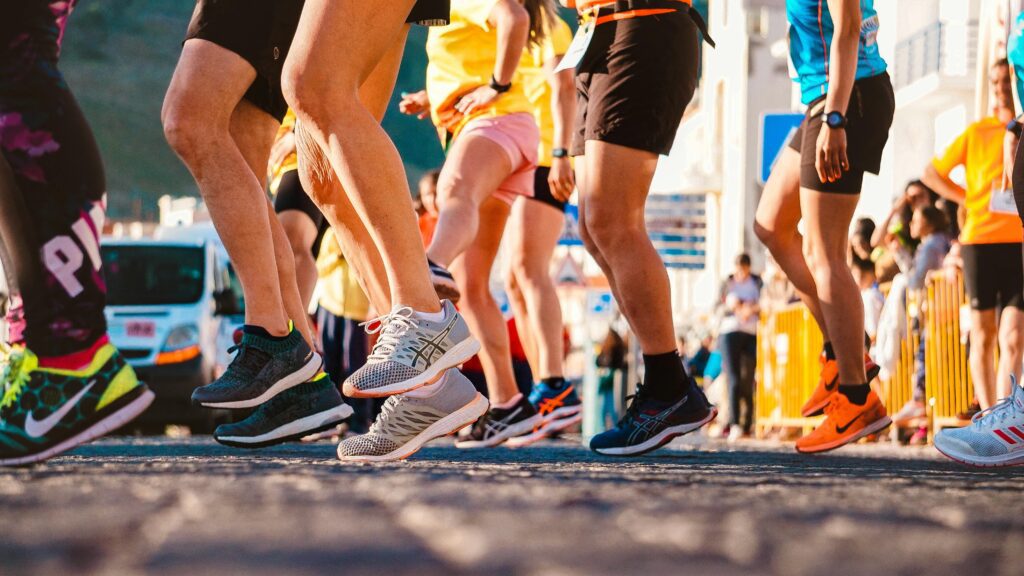
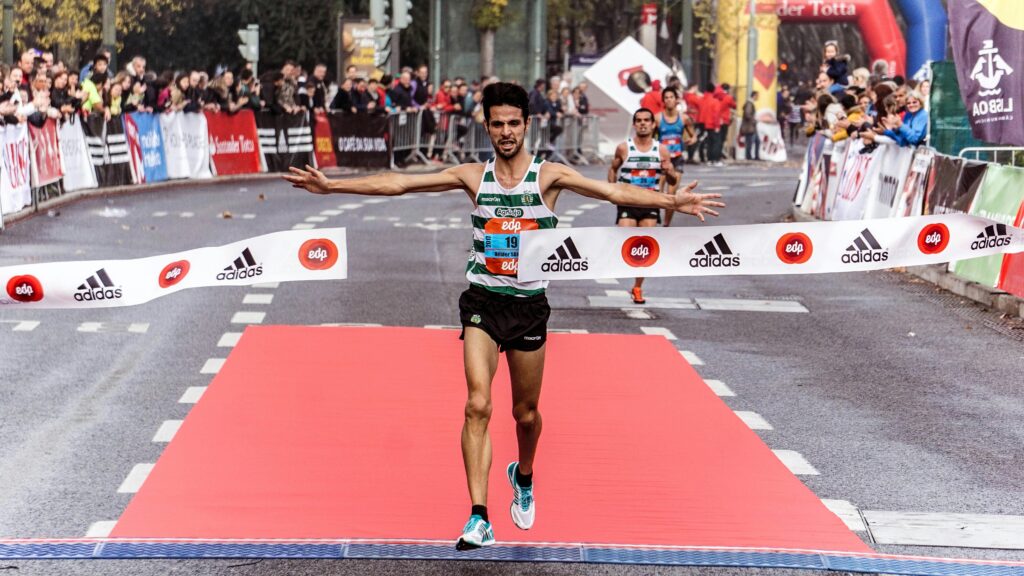
The Leuven Marathon is a brand-new addition to the Belgian running calendar. At the end of April, the university city will host its first full marathon, with a course that showcases Leuven in all its facets. Although it is a first edition, the event builds on the experience and success of last year’s European Running Championships, also held in Leuven.
As with any spring marathon, timing and conditions play a crucial role. The weather can be a decisive factor, and the course demands a well-thought-out strategy. Runners who arrive at the start line properly prepared lay the foundation for a strong and controlled race.

Late April in Leuven: when the weather becomes a factor
Late April means winter is behind us, but spring is still unpredictable. For the Leuven Marathon, warmer conditions are a realistic possibility and they can have a greater impact than many runners expect.
After months of winter training, your body may not yet be fully adapted to higher temperatures. A marathon pace that feels comfortable in cool weather can suddenly feel significantly harder when it warms up. That is why flexibility is essential. In the weeks leading up to race day, it helps to include sessions on milder days and, on the day itself, to avoid clinging to one fixed target pace.
Hydration plays a key role here. Taking your time at aid stations is crucial. Especially in warmer conditions, this can make the difference between maintaining your rhythm and hitting the wall.

Not a flat marathon
With 243 metres of elevation gain, the Leuven Marathon is not a flat course. At the same time, it is nowhere extreme. That is precisely what makes it deceptive: the elevation is spread throughout the race, across different loops, and requires careful energy management.
The marathon consists of three main loops: an urban loop, a green loop and a final loop combining city sections with flatter stretches. This requires not only physical preparation, but also a clear plan.
A good start… but above all, controlled
The first loop takes you through the city and quickly confronts you with several notable climbs. In the excitement of the start, it is tempting to try to hold your planned pace. Yet this is exactly where restraint matters most.
Climbs such as the Keizersberg are not the place to push. They are the place to conserve energy. Trying to force your pace uphill often means burning matches you will need later. It is wiser to ease off slightly on the climb and keep your effort level consistent. The marathon is still long at this stage.

Green surroundings: finding rhythm outside the city
After the urban section, the course heads towards a more wooded area. This green loop feels different: calmer, cooler and often mentally more comfortable. The surface is surprisingly runnable. No heavy, muddy trails, but stable paths that allow you to settle into a steady rhythm.
This part of the race offers an opportunity to recover from the opening loop. The pace often feels more natural and sustainable here, which is exactly what you want. Use this section to manage your breathing, regain focus and preserve energy for what lies ahead.
Back into Leuven: the decisive phase
From around kilometre 25, you return to Leuven. Fatigue begins to surface, and even gentle inclines can feel more demanding than expected. Many runners experience that familiar thought: perhaps the best legs are already behind them.
The course design works in your favour here. The Keizersberg is avoided, and the route follows flatter roads along the Vaart. If you have managed your effort well, this is where you can gradually increase the pace. If you are struggling, the flatter terrain still allows you to keep moving without overextending yourself.
A final stretch that demands determination
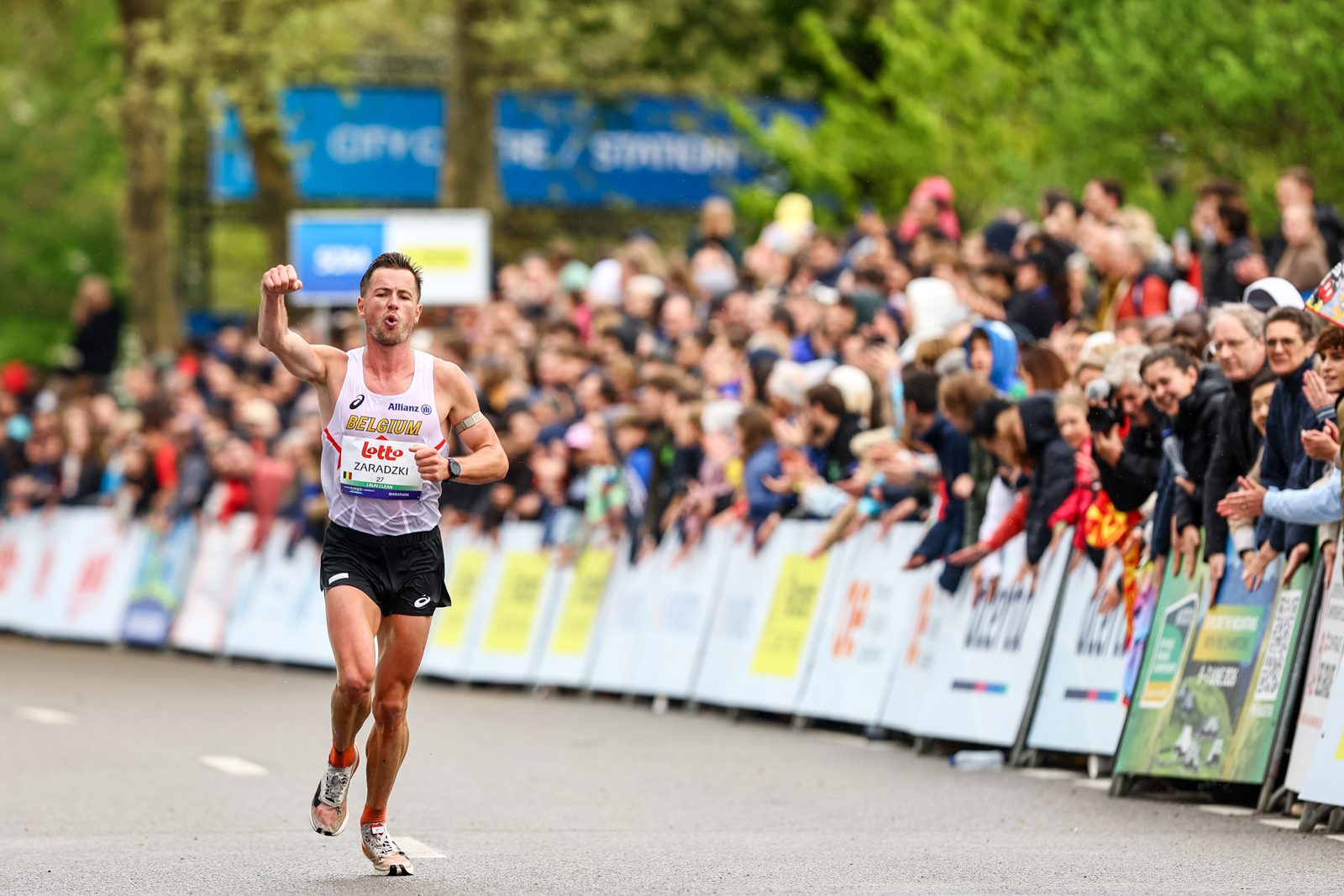
The final straight towards the finish at Sportoase Leuven rises noticeably. After 42 kilometres, it won’t feel gentle. But the finish line is close.
Focus on staying tall, keeping your cadence high and shortening your stride slightly. Rather than dwelling on the discomfort, concentrate on what comes next: the finish, the relief, and the reward for months of preparation.
A marathon for runners who dare to pace wisely
The first Leuven Marathon is a race for runners who can control their enthusiasm. Those who start conservatively, adapt to the weather conditions and read the course intelligently increase their chances of running strong all the way to the finish.
Not by forcing the pace, but by making the right decisions at the right moments. And that is exactly what makes this first edition of the Leuven Marathon such an interesting addition to the calendar: a race that rewards insight, patience and timing.
Want to prepare properly for the Leuven Marathon? We’ve got you covered!
With a running fitness test, we assess your current condition and map out your training zones. Based on your results, we create a personalised training plan to get you fully race-ready.
Book your running effort testRelated inspiration
How many years and quality of life can be gained by becoming physically fitter?
Discover how improving your physical fitness can add years to your life and enhance its quality. Studies show that regular exercise can significantly extend life expectancy and reduce the risk of diseases. Find out the benefits of becoming more physically active and how small changes can have a big impact on your health and longevity.