
Are you gearing up for a race you’ve been training months for, hoping to set a personal best? Going out too fast is a definite no, but holding back too much isn’t ideal either. So, how do you determine the right pace?
Thijs Dekiere, physical coach at Golazo Energy, explains: “Everything starts with setting a realistic target time based on your previous races or training sessions. If you’re aiming to beat your personal best on the 10K, try testing yourself in training with intervals just slightly faster than your desired 10K pace. Break them into 8 to 10 repetitions of 1,000 metres. If you find this pace too challenging during training, it’s time to reassess your race-day ambitions.”
You could also opt for a test race, such as running a half marathon at marathon pace or slightly faster. Thijs continues: “If you’re already hitting your limit during those 21 km, it’s unlikely you’ll manage a marathon at that same pace six to eight weeks later.”
There are also theoretical tools to predict performance over different distances, like formulas or lactate tests. Based on your anaerobic threshold pace (the speed you can maintain for about an hour), you can estimate your potential finish time. Of course, your race-day performance will also depend on your physical condition and external factors, like weather and course conditions.
From goal to race plan
Once you’ve set a realistic goal, the next step is creating a race plan. Ideally, you’ll aim for an even pace or a negative split—running the second half of the race faster than the first.
Thijs explains: “Scientific research shows that a negative split is the most effective strategy. It helps you avoid burning out early. If your goal is to finish a marathon in under four hours, you should start at an average pace of 5:40 per kilometre and maintain that pace throughout the 42 km.
Many runners make the mistake of starting too quickly, running the first 20–30 km at 10 to 30 seconds per kilometre faster than planned. While they might gain a seven-minute lead initially, they often face cramps or energy crashes later, leading to stretching breaks or walking. This can cost them one or two minutes per kilometre, putting their sub-four-hour goal out of reach. Sticking to your target pace from the start conserves your energy reserves and increases the likelihood of maintaining a steady pace until the finish line. And yes, it will feel tough from kilometre 35 onwards—there’s no avoiding that.”
Save your push for later: Even if you’re feeling good, resist the urge to push the pace too soon. Thijs advises: “In a marathon, I recommend running at a comfortable pace until at least the 30 km mark. That’s when most runners start struggling. Elite runners from Ethiopia and Kenya often wait until kilometre 38 or 39 to launch their final push. Instead of risking a premature acceleration, aim for a safe, sustained sprint at the end.”

A little faster, a little slower
At major events, you don’t have to monitor your pace alone. Simply follow pacers aiming for your target time. Thijs explains: “A good pacer maintains an even pace and knows the course inside out, helping to navigate typical challenges. For example, on a hilly course, a strong pacer will slightly increase the speed on downhill sections, as it requires less effort, and slow down uphill to avoid pushing runners into the red zone.
The same applies to headwinds and tailwinds. Pacers may also pick up the pace slightly before an aid station, allowing runners to eat and drink without losing too much time.”
Thijs suggests adopting similar tactics yourself: “Try to gain 10 seconds per kilometre before an aid station. That way, you can comfortably refuel and still maintain your average pace afterwards.”
Struggling to set the perfect race plan?
If you’re finding it difficult to determine your ideal race pace, Golazo Energy can help. Our fitness test maps out your optimal pace and heart rate zones, and we’ll create a personalised training plan tailored to your goals. This includes preparing you for race day and identifying your perfect race pace.
Learn more about our effort running test here and set yourself up for success!
This article was created in collaboration with running.be.
Related inspiration

CEO Gravel Challenge
What if, instead of telling CEOs how to perform sustainably, we let them experience it for themselves?
With the CEO Gravel Challenge, Golazo Energy brings together 20 CEOs and C-level leaders in a unique journey where sport becomes a laboratory for performance, leadership and teamwork.
Just like an athlete needs to train, recover, deal with pressure and rely on their team to perform at their best, the same principles apply to today’s leaders.
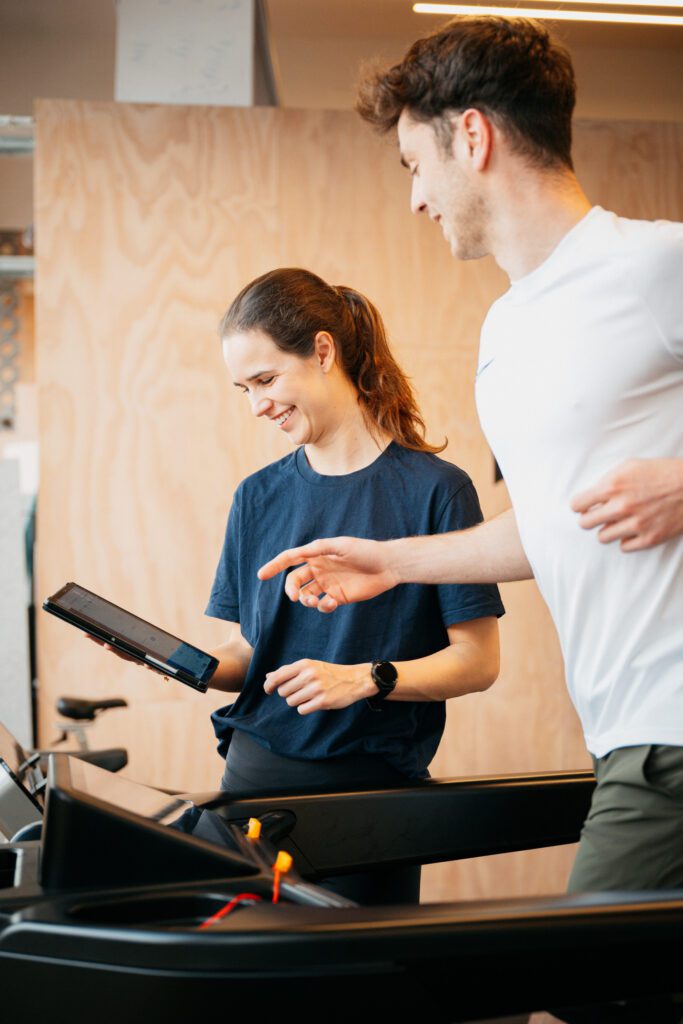
Golazo integrates OnTracx into its daily running practice: taking biomechanical load into account during training progression
Injuries remain one of the biggest challenges for runners, especially when training load increases faster than the body can adapt. That is why Golazo Energy is taking the next step in science-based running guidance. By integrating OnTracx into its daily running practice, runners gain deeper insight into the biomechanical load their body experiences while running. The result is a more personalised, structured and sustainable training build-up.

VO₂max over 100? Impressive… but do you actually need it?
VO₂max can sometimes seem like the number that matters most. The higher it is, the fitter you are… right? If podcasts and stories about elite athletes are anything to go by, you’d almost think anything below 70 doesn’t count. But is that really true? In this article, we put those impressive numbers into perspective. What does your VO₂max actually tell you about your fitness, how relevant is it to your goals and, more importantly, what should you really focus on if you want to become a stronger athlete?

What does a DEXA scan really measure?
A DEXA scan is often associated with measuring body fat and muscle mass. But did you know it can also provide valuable insights into your bone health, resting metabolic rate and overall body composition? Discover what a DEXA scan really measures and why it offers so much more than a standard body composition assessment.

Baloise Antwerp 10 Miles: where the course truly tests you
The Baloise Antwerp 10 Miles is a true classic but the course demands more than simply holding your pace. In this blog, we highlight where the real challenges lie and share practical tips to help you handle the tunnels, manage your rhythm and adapt to the conditions.
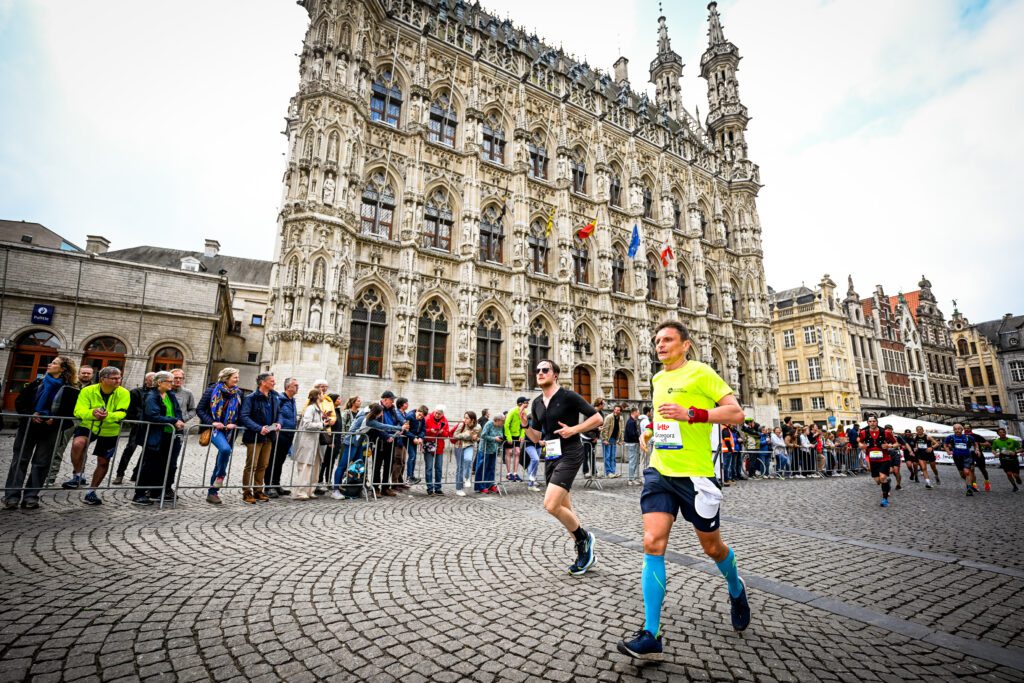
Leuven Marathon: why timing, pacing and courage will define your race
The Leuven Marathon is a brand-new challenge on the Belgian running calendar. With elevation changes, varied surroundings and the possibility of warmer spring conditions, this course demands more than just fitness. In this blog, you’ll discover where the real pitfalls lie and how to approach them with a smart race strategy.

Sofico Ghent Marathon: why this spring classic demands more
For many runners, the Ghent Marathon is the first major race of the spring. What looks like a flat course on paper demands more adaptability in reality. In this blog, you’ll discover the key challenges of the course and get practical tips on how to approach them smartly.

Testimonial Margo
Running a marathon doesn’t start at the start line, it starts with a smart, well-structured plan. In this testimonial, Margo shares how personalised coaching, effort testing and long-term guidance from Golazo Energy helped her complete her first marathon in her home city of Leuven, injury-free and full of confidence.

Finding the right pace for your cycling event
Taking on a gran fondo, an iconic mountain pass or a cobbled classic? Smart pacing is the secret to riding with confidence and crossing the finish line stronger. Former pro cyclist and coach Bart De Clercq shares expert tips on pacing, fuelling and course strategy.


The irresistible pull of ultra-processed foods
They’re everywhere, bright packaging, tempting flavours and perfectly portioned. Ultra-processed foods have become part of daily life, and let’s be honest: they’re hard to resist. But why is that? And what do these foods actually do to your body, your energy and your performance?






How to determine your workout intensity
This article explains how to determine the right workout intensity based on your fitness goals. By understanding your heart rate zones and calculating your maximum heart rate, you can optimize your training for better performance. It offers practical advice on adjusting your intensity to improve endurance or target specific fitness improvements.
How many years and quality of life can be gained by becoming physically fitter?
Discover how improving your physical fitness can add years to your life and enhance its quality. Studies show that regular exercise can significantly extend life expectancy and reduce the risk of diseases. Find out the benefits of becoming more physically active and how small changes can have a big impact on your health and longevity.