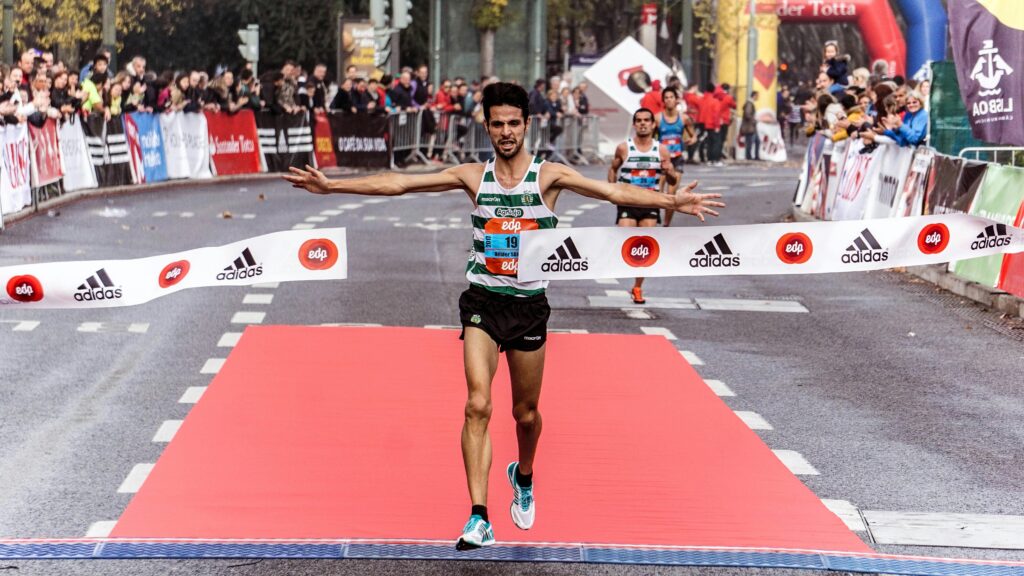
Sunny days invite us to head outside and get moving. But when the temperature rises, your body needs extra care. Your heart has to work harder to cool you down, which can cause your heart rate to increase by 10 beats per minute or more, even in moderately warm conditions (from 15 to 20°C). Without the right preparation, you risk dehydration or overheating. With these tips, you can train safely and comfortably, even on the hottest days.

1. Adjust your training
High temperatures? Lower the intensity and shorten the duration of your workouts. Or choose lower-impact activities like swimming or walking. Give your body time to adapt to the heat and don’t push beyond your limits.
2. Train at the right time
Plan your workouts early in the morning or later in the evening, when the sun is less intense and temperatures are cooler. Avoid training during the hottest hours between 12:00 and 16:00 — heat peaks usually occur in late afternoon, and it can stay warm well into the evening. Training during the day anyway? Stick to shaded routes in forests or parks to avoid direct sun exposure.
3. Stay hydrated
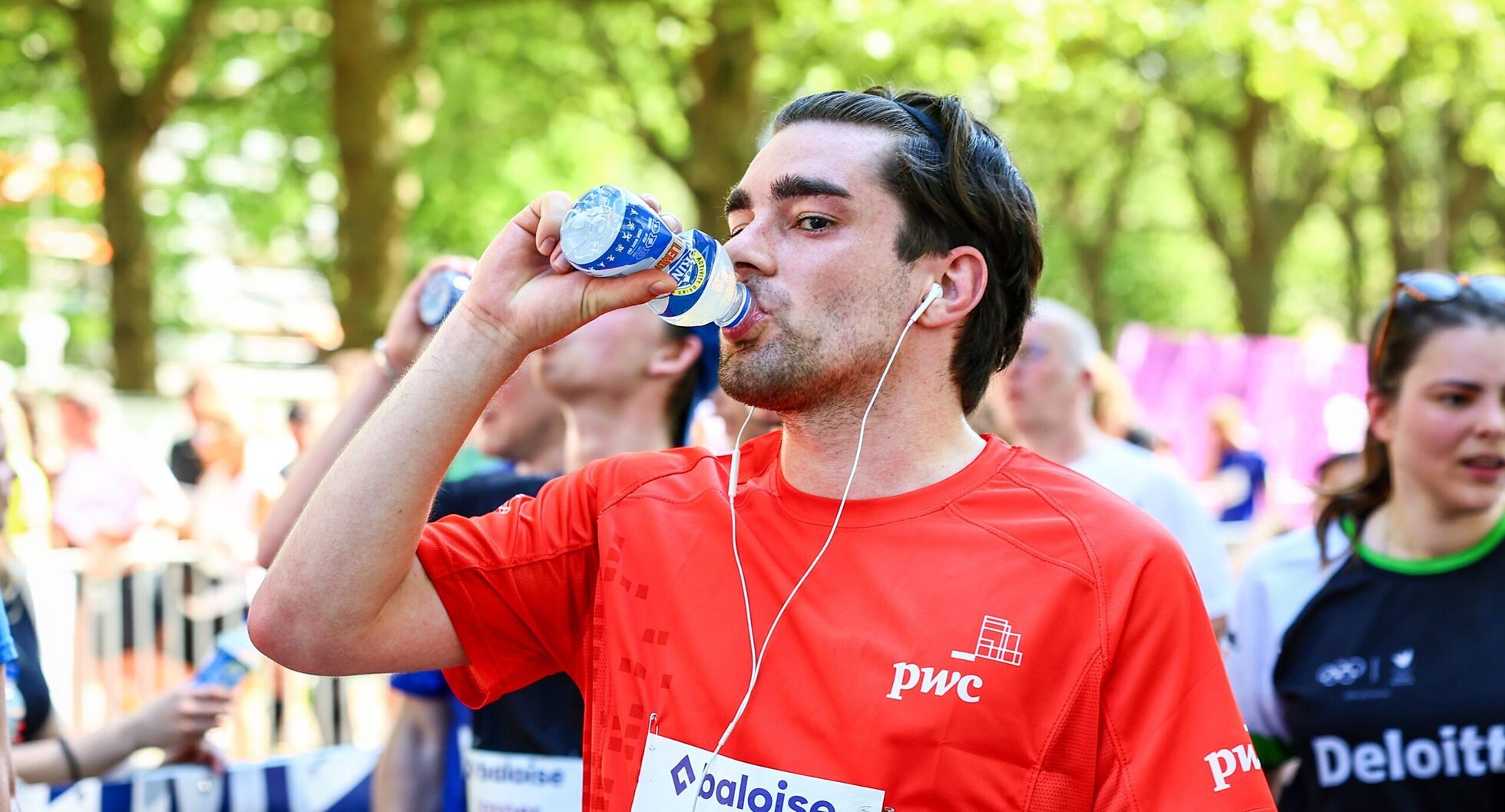
Water is essential for your body. It helps remove waste and keeps both muscles and brain functioning properly. During just one hour of exercise, you can lose 1 to 2 litres of fluid, even if you don’t feel like you’re sweating much. Replenish what you lose by drinking water and/or isotonic sports drinks. This helps maintain energy levels, focus, and performance, and reduces your risk of cramps and joint discomfort.
Hydration tips for hot workouts:
- Before: Start your session well hydrated. Drink water, an isotonic drink, or an oral rehydration solution (ORS) to restore your fluid and electrolyte balance.
- During: Sip small amounts every 15 minutes, aim for around 120 to 250 ml each time (about a glass). Training longer than an hour? Switch to an isotonic sports drink with electrolytes to restore both fluids and energy. Feeling thirsty? That’s a sign you are dehydrated.
- After: Replenish what you’ve lost. As a rule of thumb: drink about 1.5 times the weight you lost during your session. Your body doesn’t absorb all fluids at once, this formula helps ensure complete rehydration.
Not sure if you’re drinking enough?
- Weigh yourself before and after your session, ideally dry and without clothes, for the most accurate result.
- Check your urine colour: a light yellow is a good sign.

4. Wear the right gear
Try to wear light, breathable, loose-fitting clothes in bright colours. Technical fabrics like polyester wick away sweat and help keep your body cool. A lightweight cap protects your head from the sun, and sunglasses can shield your eyes from glare and harsh light.
5. Don’t forget sun protection
Apply a water-resistant sunscreen with at least SPF 30, and don’t forget the easy-to-miss spots like your ears, neck, and the back of your legs. Reapply if you’re training outdoors for an extended period.

6. Help your body cool down
If possible, choose cooler training environments like forests or shaded areas. Elite athletes also use strategies to manage core temperature (normally around 37°C), such as drinking cold fluids or even an ice slush before or during workouts. These methods help lower internal temperature and maintain performance for longer.
7. Listen to your body
Be alert for signs of overheating: dizziness, nausea, headache, or muscle cramps. Not feeling right? Stop immediately, find a cool spot, and rehydrate. There’s no shame in adjusting or even skipping a workout when conditions get extreme.

8. Boost your fitness — with heat
Training in the heat can be a challenge, but elite athletes often use it to their advantage. Heat training helps your body adapt: blood volume increases, blood circulation improves, and you regulate temperature more efficiently. These adaptations can not only help you train in the heat, but also improve overall endurance.
Thinking about heat training yourself? Talk to a coach or expert first. Done safely, it can become a powerful tool to build resilience and fitness.
What if race day is hot?
Unlike training, you can’t control the temperature on race day. That’s why preparation is key. If the heat spikes unexpectedly, adjust your strategy.
Start slower than usual and keep an eye on your heart rate. Listen to your body and make adjustments as needed. Cool yourself down when you can, pour water over your head and neck at aid stations, and drink regularly to stay hydrated.
Feeling overheated? Don’t hesitate to dial it back. A safe finish is always worth more than pushing through in risky conditions.
Be prepared, but stay flexible
Yes, you can train safely in the heat, as long as you adjust your approach. Smart planning, proper hydration, and body awareness go a long way in reducing risks and increasing comfort. But even with the best preparation, heat remains unpredictable.
Your health always comes first. Don’t let performance goals override common sense. Sometimes, slowing down or pressing pause is the smartest move to keep progressing long-term.
Related inspiration
How many years and quality of life can be gained by becoming physically fitter?
Discover how improving your physical fitness can add years to your life and enhance its quality. Studies show that regular exercise can significantly extend life expectancy and reduce the risk of diseases. Find out the benefits of becoming more physically active and how small changes can have a big impact on your health and longevity.

How to determine your workout intensity
This article explains how to determine the right workout intensity based on your fitness goals. By understanding your heart rate zones and calculating your maximum heart rate, you can optimize your training for better performance. It offers practical advice on adjusting your intensity to improve endurance or target specific fitness improvements.